8 Best AI Tools for Instagram to Explode Your Growth in 2025 Instagram is no longer just a photo-sharing app; it is a full-blown business engine. But let's be honest: keeping up with the algorithm is exhausting. You need to post Reels, Stories, and Carousels daily just to stay relevant. This is where the best AI tools for Instagram come in to save your sanity. Top influencers in Los Angeles, London, and Sydney aren't working harder than you; they are leveraging AI to automate the heavy lifting. In this guide, we reveal the top 8 AI tools that will help you create viral content, write engaging captions, and grow your following on autopilot. Top 8 AI Tools for Instagram Content Creation 1. InVideo AI (The Viral Reel Maker) Video is king on Instagram. InVideo allows you to turn a simple text prompt into a publish-ready video. It automatically adds stock footage, voiceovers, and subtitles. Best for: Creating faceless Reels and informational videos. T...
How to Use ChatGPT for Homework Step by Step: The Ultimate Student Guide

The landscape of education has changed forever. For students in high-pressure academic environments—whether you are tackling A-Levels in the UK, AP classes in the US, or university courses in Canada and Australia—efficiency is the name of the game. Enter ChatGPT.
Used correctly, ChatGPT is not a cheating tool; it is the world's most powerful 24/7 tutor. It can explain complex calculus problems at 2 AM, proofread your history essay for clarity, or help you brainstorm creative ideas for a science project. However, many students make the mistake of simply asking for answers, which robs them of learning and risks academic integrity violations.
In this guide, we will cover exactly how to use ChatGPT for homework step by step to boost your grades, save time, and actually learn the material.
Why You Should Use AI as a Tutor, Not a Replacement
Before we dive into the steps, it is crucial to understand the mindset. Top students use AI tools to leverage their intelligence, not replace it. Think of ChatGPT as a study buddy who has read every textbook in the library but sometimes hallucinates facts.
- Efficiency: It cuts down research time by summarizing long documents.
- Personalization: It adapts to your learning style (visual, text-based, or analogy-based).
- Availability: It never gets tired or frustrated with repeated questions.
Step-by-Step Guide: How to Use ChatGPT for Homework Efficiently

Step 1: Set Up for Success
First, ensure you are using the best version available to you. While the free version (GPT-3.5 or GPT-4o mini) is fast, the paid versions (GPT-4 or GPT-4o) often have better reasoning capabilities for complex math and science problems.
Pro Tip: Turn off "Chat History & Training" in your settings if you are discussing sensitive data, although for general homework, keeping history on allows the AI to "remember" your course context.
Step 2: The "Socratic" Method for Math and Science

Never ask ChatGPT to "do" your math homework. Instead, use it to break down the logic. If you just get the answer, you will fail the exam when ChatGPT isn't there.
The Wrong Prompt:
"Solve 2x + 5 = 15."
The Right Prompt:
"I am studying algebra. Can you act as a math tutor and guide me through solving 2x + 5 = 15 step-by-step? Don't give me the answer immediately; ask me questions to help me solve it myself."
By asking it to act as a tutor, you force the AI to explain the methodology, which helps you retain the information.
Step 3: Essay Writing and English Literature
ChatGPT is an excellent writing assistant. Use it to brainstorm, outline, and proofread. Do not use it to write the essay for you—AI detectors are becoming sophisticated, and AI writing often lacks the unique human voice teachers look for.
Try this workflow:
- Brainstorming: "I need to write an essay on the themes of 'Macbeth'. Can you give me 5 unique thesis statement ideas that focus on the role of guilt?"
- Outlining: "Create a detailed outline for a 5-paragraph essay based on the thesis: [Insert Thesis]. Include a hook for the intro and topic sentences for each body paragraph."
- Feedback: Paste your draft and ask: "Review this paragraph for clarity and flow. Point out any passive voice or weak arguments, but do not rewrite it for me."
Step 4: Using File Uploads for Research
If you have a Premium subscription or access to a model with file upload capabilities, this is a game-changer. You can upload a PDF of a research paper or a photo of a textbook page.
Scenario: You have a 50-page PDF reading for a sociology class.
Action: Upload the PDF and prompt: "Summarize the key arguments of this paper in bullet points. Then, list the three most important pieces of evidence the author uses to support their conclusion."
Step 5: Language Learning and Practice

For students in Canada or the UK studying French, Spanish, or German, ChatGPT is an infinite conversation partner.
Prompt: "Act as a native Spanish speaker. I want to practice ordering food in a restaurant. Please roleplay with me, correct my grammar mistakes in English after every response, and keep the conversation going."
Advanced Tips & Best Practices
Give It a "Persona"
You get better results when you tell ChatGPT who it is supposed to be. Context matters.
- For History: "Act as a strict history professor."
- For Coding: "Act as a senior Python developer explaining code to a junior."
- For Economics: "Explain this concept like I'm 12 years old."
Use "Chain of Thought" Prompting
If the AI is giving you wrong answers (common in complex math), ask it to "think step by step."
"Read this physics problem. Before answering, list out all the known variables, identify the correct formula, and explain your reasoning for choosing that formula."
Verify Facts (The Hallucination Problem)
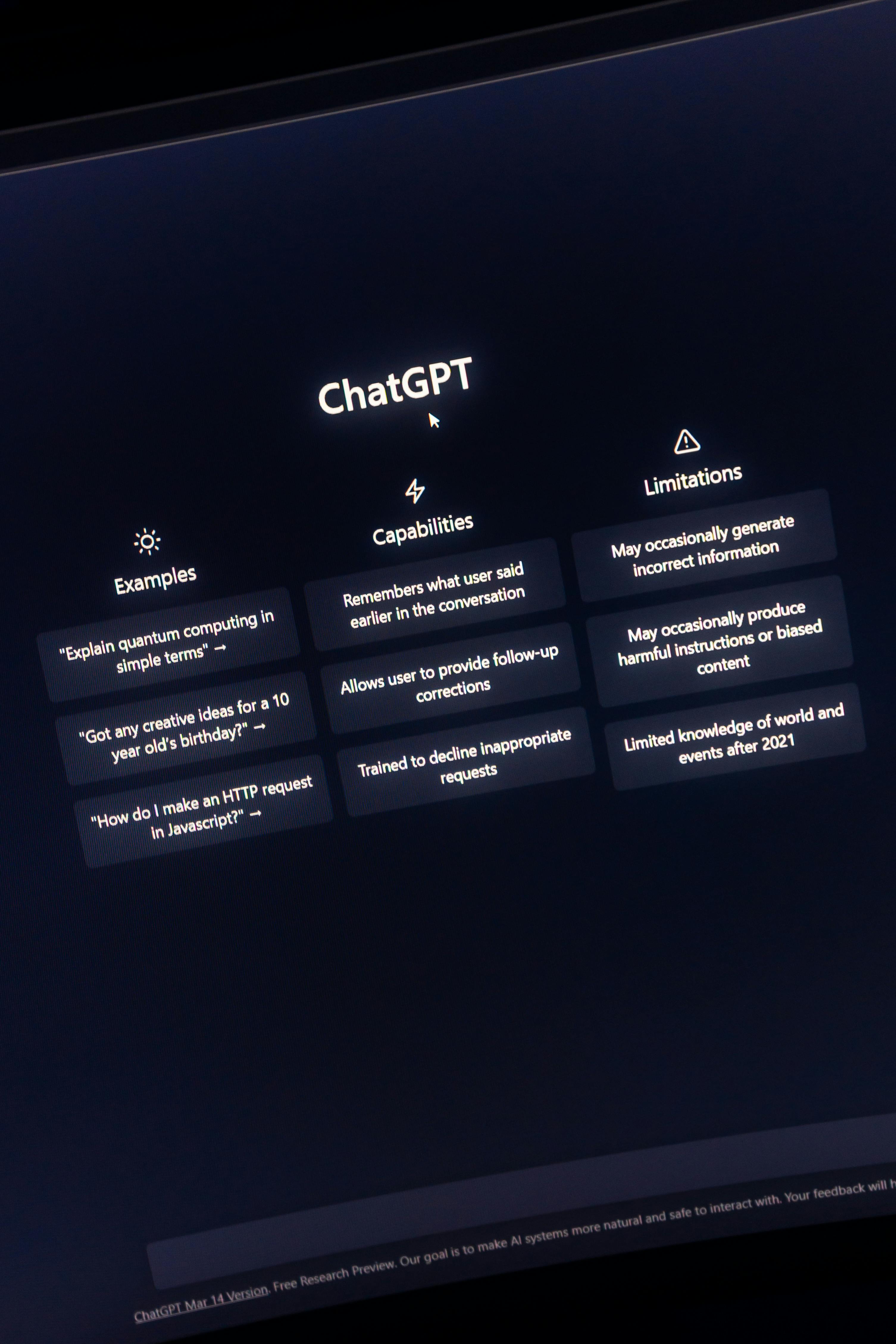
ChatGPT can sound confident even when it is wrong. Always verify dates, citations, and specific facts with your textbook or reliable external sources. Never use a quote provided by ChatGPT without checking if it actually exists.
Conclusion: The Future of Homework
Learning how to use ChatGPT for homework is a skill that will serve you well beyond high school or university. The ability to collaborate with AI to solve problems is becoming a requirement in the modern workforce.
Start small. Use it to clarify a confusing definition or check your grammar on an email to a professor. As you get more comfortable, you can integrate it into your study routine as a powerful tutor.
Ready to boost your grades? Open ChatGPT right now, find a difficult concept from your last lecture, and ask: "Explain this concept to me using a real-world analogy." You will be amazed at how quickly it clicks.
Disclaimer: Always adhere to your school or university’s academic integrity policy. Use AI to assist your learning, not to bypass the work.
Comments
Post a Comment